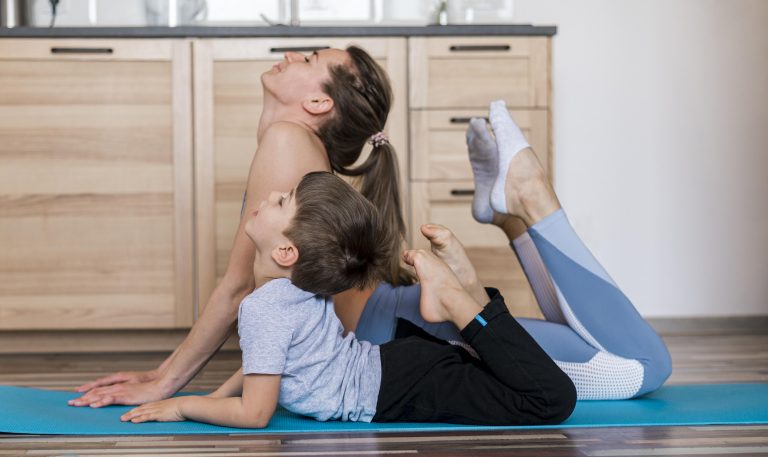
In our modern world filled with smart devices, staring at screens makes humanity do nothing but stare. Let’s not misunderstand — smart devices are useful, but we shouldn’t let them take control over our bodies. We must prevent the consequences of too much screen time, and this is only possible through prevention. There is one free way to do it: movement!
Why is it a challenge? What are the possible problems?
At least half of the population sits in front of computers or laptops at work. Children sit all day at school. Then everyone goes home and sits again in front of the TV or their phones to relax. Muscles and joints receive nutrients only when they are moved. If something isn’t used, it weakens. Just think about what happens when someone breaks a leg — how much the muscle weakens, how fragile the bones and joints become. That’s why physiotherapy is needed before returning to daily activities.
Movement must become as essential to life as breakfast does. (I hope you eat breakfast!)
Muscle is the organ of longevity!
How does movement affect our body and our lives?
The human body is a miracle. Whatever we do with it long-term, it will adapt. If we allow it to “rest” and don’t move it, we’ll become weak. There won’t be enough muscle to support the joints, and neither the muscles nor the joints will get enough nutrients. This leads to pain and destructive processes. If we spend all day hunched over our phones, staring down, we develop what is called “Banyapúp.”
What’s most alarming is that this condition appears increasingly among young people. That’s why it’s now often referred to as “text neck.” With the rapid (questionable?) development — or rather addiction — to social media, I’d prefer to call it “TikTok neck.”
However, by moving properly and building strength, we can maintain our physical abilities so we remain strong and have better stamina across all areas of life — whether chasing after a bus or a child.
When using your phone, try doing so with proper posture and eye movement. Don’t get lost in the virtual world. Follow content that supports your personal growth.
These solutions are just examples. Everyone has different needs, priorities, and issues. What works for one person may not work for another. Experiment to find what helps you, and don’t worry if it’s unique.
- Schedule it: Put exercise time in your calendar. Ask for help if you’re alone, or find a place with childcare.
- Enjoy it: Find a type of movement you love and can easily fit into your life. Surround yourself with motivated people!
- Stress management: Follow supportive people who encourage your growth. Prioritize good sleep — if you need help, look up info on saffron.
- Assessment: Visit a personal trainer for a fitness assessment. Measure yourself, take photos, and compare results every two months.
- Supplements: Omega-3 fatty acids may reduce general inflammation and improve cardiovascular health.
References:
- Iizuka Y et al. Prevalence of Chronic Nonspecific Low Back Pain… Asian Spine J. 2017;11(6):989–997. PMID: 29279756
- Laird RA et al. Subgroups of lumbo-pelvic flexion kinematics… BMC Musculoskelet Disord. 2018;19(1):309. PMID: 30153815
- Study on movement impairment patterns: PMID: 17374634
- Molecular background of low back pain: PMID: 15089084
- Review of postural risks: PMID: 31451200