“Tonight you’ll sleep with the pigs.”
As a child, I often came home so dirty that this was the greeting I got. Do you remember running barefoot in the grass, or coming home covered head to toe in mud after a big adventure? Back then, parents didn’t welcome us with hand sanitizer, but maybe with a garden hose at best.
Today, however, parents are under increasing pressure to keep their children always clean, neat, and “sterile and safe.” Yet dirt is not the enemy, it is one of nature’s greatest gifts to the developing body and soul. Of course, I understand those parents who raise their children in the most concrete-heavy parts of the city, where these opportunities are simply not available and require careful planning and travel. Believe me, it’s worth it!
Why is an overly clean childhood a problem?
According to the hygiene hypothesis, if a child doesn’t encounter enough microbes and microorganisms, their immune system “underperforms” in its learning process. In the long run, this may increase the risk of allergies, asthma, eczema, and autoimmune diseases.
But excessive cleanliness doesn’t only affect physical health. Being cut off from nature has a profound impact on a child’s emotional and psychological development. Richard Louv even coined the term “nature deficit disorder” to describe the restlessness, anxiety, and attention problems that can result from a lack of nature. Too much hygiene is not the same as health!
How does it affect the body and nervous system?
- Strengthening the microbiome: Beneficial soil bacteria such as Mycobacterium vaccae have been shown to stimulate serotonin production, leading to better mood and a calmer nervous system.
- Grounding: Direct contact with the earth (for example, walking barefoot) may reduce inflammation, improve sleep, and regulate cortisol levels.
- Sensory integration: The textures of grass, sand, pebbles, and mud stimulate nerve endings in the feet, enhancing sensory processing and fine motor development.
- Stress reduction: Playing in natural environments lowers children’s cortisol levels and increases parasympathetic nervous system activity.
Why isn’t dirt today the same as it used to be?
In the past, our food had direct contact with the soil: vegetables and fruits were often slightly “dirty,” and with them we consumed beneficial soil bacteria. Many of these played a key role in strengthening the microbiome and training the immune system.
Today, however, most of our food is grown in sterile environments, hydroponics or chemically treated soils, so these helpful microbes have disappeared from our diets. That’s why it’s important to consciously support the gut flora with bio produce, fermented vegetables, probiotics, and an Omega-3-rich diet.
But there is also an important difference between natural dirt and urban pollution. The microorganisms in soil, gardens, forests, or parks help build children’s immunity, while city dust often contains heavy metals, chemicals, or microplastics from traffic and industry, all of which burden the body rather than support it. That’s why it’s best to provide “dirt experiences” in true natural settings – in a garden, a park, or out on a forest hike, where children can encounter nature’s healing power.
Without proper nervous system functioning, children struggle to regulate emotions and stress. By supporting their immune and nervous system from the inside (with omega-3s, vitamin D, magnesium, etc.), they gain more inner resilience to enjoy play, connect with nature, and choose real-world experiences over the constant lure of screens.
Parental self-care and mindfulness
Many parents feel they can only be “good parents” if their child is always spotless. But this constant pressure creates ongoing stress, which affects the parent-child relationship. Sometimes we even absorb this belief from our environment, that a child must always look clean.
If a parent is constantly anxious about cleanliness, the child can’t fully enjoy play. They may either try to remain spotless while playing, or feel guilty for getting dirty. This inner tension can, over time, contribute to anxiety symptoms or compulsive behaviors.
Mindful parenting teaches us to let go of the illusion of perfection and focus on the present moment. When your child comes to you with muddy hands and a joyful smile, it’s an opportunity for you to connect with nature and with them. If we ourselves see dirt as a problem, it’s very difficult to allow our child the freedom to enjoy it and yet it is so important (for both of you).
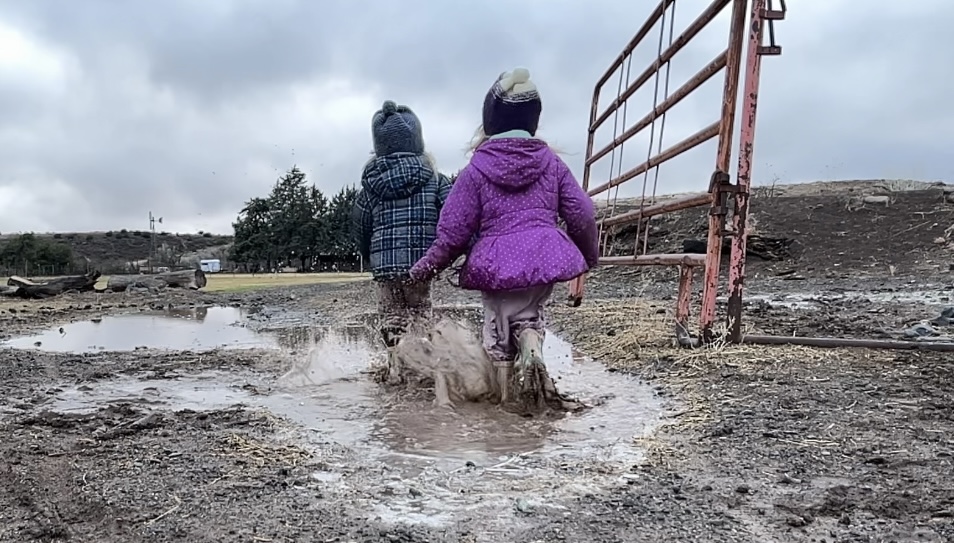
Try joining in these messy games: jumping in puddles, rolling in the grass, or making mud pies together. Not only will it deepen your bond, but it will also reduce your own stress levels. And for the adult, these moments can heal the inner child dissolving old beliefs like “be a good kid, don’t get dirty.” Shared play is liberating, and it sets a positive example: your child learns that inner joy, connection, and lived experience matter far more than spotless clothes or others’ judgments.
These solutions are just examples. Everyone has different needs, priorities, and problems. What helps someone may not necessarily work for someone else. Experiment to find what helps you, and don’t worry if it’s unique.
- Plan a weekly “messy day” when you play barefoot in the garden or park.
- Join in the play yourself, it strengthens your bond and lowers your stress.
- Keep a special play outfit for your child that’s just for rolling in mud.
- Go outside after rain and let your child splash in puddles.
- Join in: make mud cakes, pebble labyrinths, or leaf collections together.
- Support your child’s immune and nervous system with brain-boosting nutrients (such as omega-3s and vitamin D), which are essential for bone growth and healthy immunity.
Dirt can be washed away!
The most beautiful childhood memories aren’t born on shiny screens, but in the sunshine, between blades of grass, and in muddy puddles. Let your child discover the world in its raw, imperfect beauty. Dirt can be washed away, but childhood experiences cannot be brought back.
Csenge Bakos
References:
- Regulation of the immune system by biodiversity from the natural environment: an ecosystem service essential to health; G A Rook, 2013 https://pubmed.ncbi.nlm.nih.gov/24154724/
- Identification of an immune-responsive mesolimbocortical serotonergic system: Potential role in regulation of emotional behavior; CA Lowry, JH Hollis, A de Vries, B Pan, LR Brunet, JRF Hunt, JFR Paton, E van Kampen, DM Knight, AK Evans, GAW Rook, SL Lightman, 2007, https://pmc.ncbi.nlm.nih.gov/articles/PMC1868963/
- Earthing: health implications of reconnecting the human body to the Earth’s surface electrons; Gaétan Chevalier, Stephen T Sinatra, James L Oschman, Karol Sokal, Pawel Sokal, 2012, https://pubmed.ncbi.nlm.nih.gov/22291721/